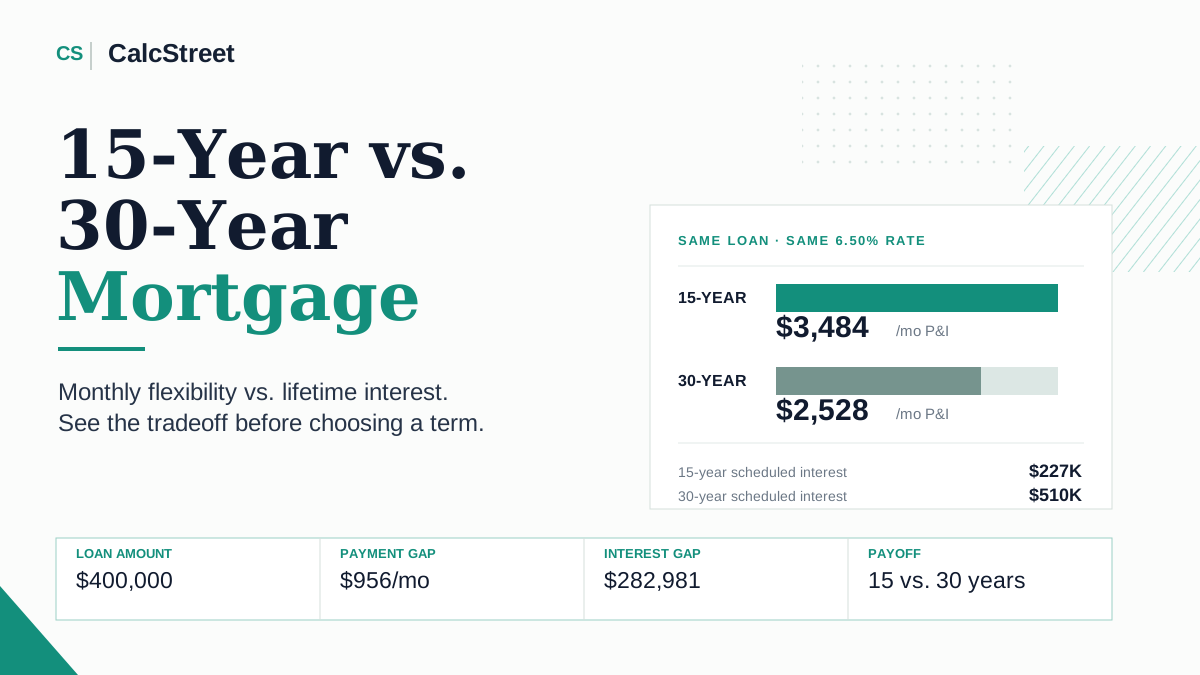
Choosing between a 15-year and 30-year fixed mortgage is mostly a tradeoff between a higher required payment now and more interest paid over time. A shorter term compresses repayment into fewer months. A longer term stretches the same principal across more payments, which lowers the required monthly principal-and-interest payment but keeps the balance outstanding longer.
The worked example uses the same 6.50% rate on both terms so the effect of term length is isolated. In the real market, 15-year and 30-year loans can have different rates, so actual Loan Estimates should be compared separately.
Read CalcStreet editorial standards →A 15-year mortgage generally costs less in total interest but requires a much larger monthly payment. A 30-year mortgage generally lowers the required payment and leaves more room in the monthly budget, but the balance falls more slowly and interest has more time to accumulate.
CalcStreet’s mortgage calculator lets you compare the required payment, total interest and payoff path with your own assumptions.
A clean comparison: $400,000 loan at 6.50%
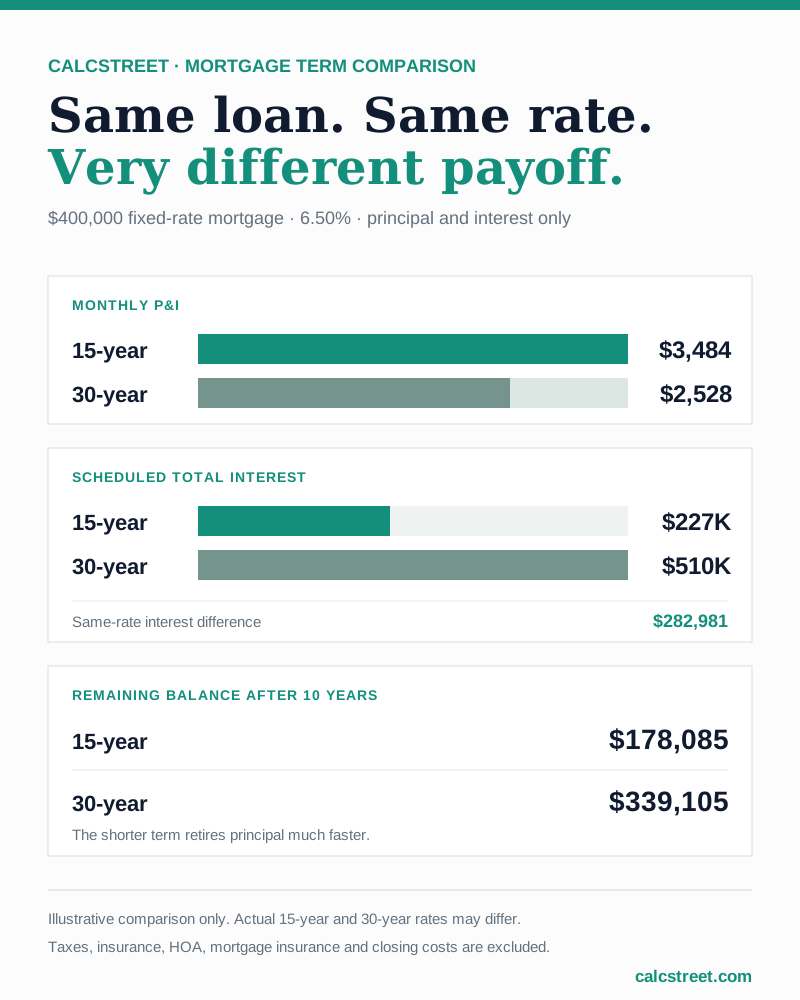
To make the term effect easy to see, start with the exact same loan amount and interest rate. The table below compares a $400,000 fixed-rate mortgage at 6.50%, excluding taxes, insurance, HOA dues, mortgage insurance and closing costs.
In this same-rate example, the 15-year payment is about $956 more per month. In exchange, scheduled lifetime interest is about $282,981 lower. After ten years, the shorter loan also has about $161,020 less principal remaining.
Why the 15-year mortgage costs less
A standard fixed-rate mortgage payment is calculated from the loan amount, interest rate and number of scheduled payments. When the repayment period is cut from 360 months to 180 months, each payment has to retire principal much faster.
That faster principal reduction matters twice. First, the loan is outstanding for fewer years. Second, the balance on which interest is calculated falls more quickly. The Consumer Financial Protection Bureau describes the same basic tradeoff: shorter terms generally have higher monthly payments but lower total cost.
Less principal remains exposed to interest in later years.
A 15-year schedule ends after 180 payments instead of 360.
Why the 30-year mortgage can still be the better fit
Lower lifetime interest does not automatically make the 15-year term the better household decision. The required payment is fixed by the loan contract. A borrower who commits to the higher 15-year payment has less room for emergencies, retirement contributions, child care, repairs, job changes or other priorities.
The 30-year term buys monthly flexibility. In the example above, the required principal-and-interest payment is roughly $956 lower. That does not mean the difference is “free”—the scheduled interest cost is much higher—but it can reduce the risk of committing too much of the monthly budget to one required payment.
Required payment and actual payment are not always the same thing. A borrower with a 30-year mortgage may choose to pay extra principal when cash flow allows, subject to the loan’s terms. But optional extra payments are different from being contractually required to make the larger 15-year payment every month.
Real 15-year and 30-year rates may not be the same
The same-rate example is intentionally artificial. It isolates the term length, but actual lenders may price the two products differently. The CFPB notes that shorter-term mortgages typically have lower interest rates, while the exact difference varies by lender and market conditions.
That means a real 15-year loan can save interest for two reasons at once: the loan is repaid faster, and its rate may also be lower. The only reliable way to compare a specific offer is to place the actual Loan Estimates side by side and compare rate, APR, closing costs, monthly payment and the loan’s five-year cost information.
A practical decision framework
Instead of asking which term is universally “better,” test whether the higher 15-year payment leaves enough margin after the rest of your budget is funded. Then compare what the shorter payoff is actually worth to you.
You value faster debt reduction, want a defined earlier payoff and still have room for reserves and other goals.
You want a lower required payment, expect uneven cash flow or prefer to keep more capacity for other priorities.
Do not compare the mortgage payment in isolation
The mortgage term changes principal and interest, but your housing budget can also include property taxes, homeowners insurance, HOA dues and mortgage insurance. A 15-year payment that looks manageable before those items are added may feel very different once the full monthly housing cost is included.
If you are still deciding what home price fits your income and existing debt, use the home affordability calculator before optimizing the loan term. If you already have a mortgage and are considering replacing it, the refinance calculator can compare the new payment, closing costs and long-run interest.
What about taking 30 years and investing the difference?
That comparison can be useful, but it introduces a different kind of risk. Mortgage savings from a shorter term are contractual and easy to calculate. Investment returns are uncertain, taxes and account type matter, and the strategy only works if the payment difference is actually invested consistently rather than spent.
For that reason, this guide does not treat an assumed investment return as a guaranteed offset to mortgage interest. If you model the opportunity cost, test multiple return assumptions and keep the mortgage comparison itself separate.
Use the same loan amount first, then replace the illustrative rate with the actual rates and fees from lender quotes.
Related guide
If the bigger question is how much house fits your income, debt and available cash, read How Much House Can I Afford? before choosing a mortgage term.